What Is a Fractional CTO? Meaning and Role
SeeSaw Labs//10 Min Read
Learn the fractional CTO meaning, key responsibilities, when to hire one, and how it compares to interim and full-time technology leadership.

Hiring your first senior technology leader is rarely a clean, dramatic moment. It usually happens after a few quiet warning signs: releases keep slipping, cloud costs keep creeping up, security questions start showing up in customer calls, and the “temporary” architecture decisions from MVP days become permanent. If you are feeling that tension, you are not alone.
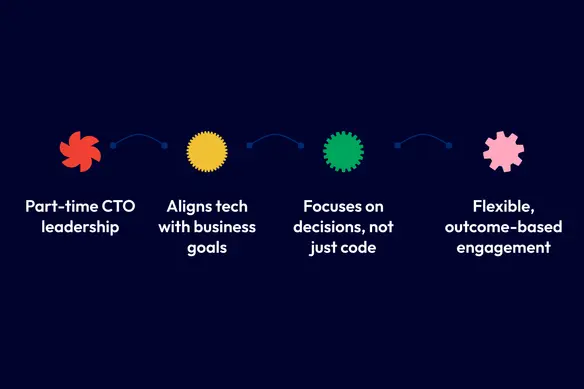
A fractional chief technology officer provides executive-level technology leadership on a flexible basis, without committing to a full-time hire.
What Is A Fractional CTO? Fractional CTO Meaning
A fractional CTO is a senior technology leader who takes on CTO responsibilities part-time or on a project basis. The goal is to align technology decisions with business goals, then help your team execute with clarity.
This is different from “extra engineering capacity.” A CTO role sits at the intersection of business strategy and technical strategy. It includes decision-making, prioritization, risk management, and leadership, not just writing code or managing tickets.
Many companies use fractional leadership when they need senior judgment now, but do not need, or cannot justify, a full-time CTO yet.
Fractional CTO Vs Full-Time CTO Vs Interim CTO Vs Outsourced CTO
The fastest way to pick the right model is to start with your actual need.
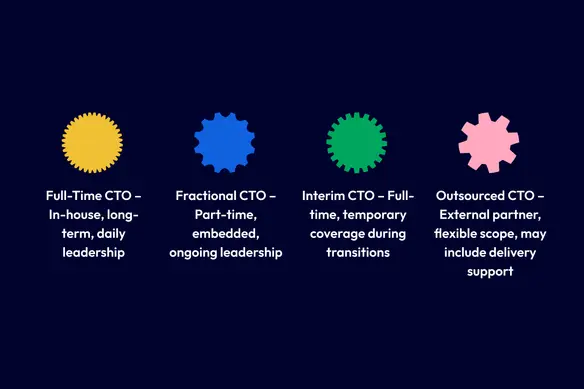
Full-Time CTO
Best when technology leadership is a daily, in-house requirement, and your business is ready to support executive compensation, long-term ownership, and ongoing org building.
Fractional CTO
Best when you need senior leadership and decision-making, but not full-time. Many fractional engagements are structured around a few days a week, or a defined set of outcomes over a fixed window.
Interim CTO
Best when you have a leadership gap that must be filled quickly, often during transition, a departure, or while you search for a permanent executive. An interim is usually more time-bound and continuity-focused.
Outsourced CTO
Often used as an umbrella term for bringing in external Outsource CTO leadership. In practice, it can look like fractional or interim leadership and may include delivery support, depending on the provider.
A useful rule of thumb: if your biggest issue is leadership and decision quality, start with fractional. If your biggest issue is a sudden leadership gap, start with an interim. If your biggest issue is delivery capacity, staff augmentation or a delivery partner may be the first move, but you still need strong technical leadership to avoid shipping the wrong things.
What A Fractional CTO Actually Does
Most high-performing fractional CTOs work in clusters around a few repeatable responsibilities.
Technology Strategy That Maps To Business Goals
A fractional CTO translates business priorities into a technology plan. That usually includes platform choices, sequencing, and trade-offs, so your team is not left to guess.
Architecture And Scalability Decisions
This includes clarifying the target architecture, reducing unnecessary complexity, and ensuring the product can scale beyond early MVP assumptions.
Delivery Operating System
Fractional CTOs often bring structure to delivery, such as process hygiene, better estimation, clear ownership, and measurement. The point is not bureaucracy; it is predictable shipping.
Security And Compliance Oversight
As you grow, customer and partner expectations rise. A fractional CTO can help put practical guardrails in place, especially as compliance requirements become more important.
Team Structure, Hiring, And Mentorship
This includes leveling up technical leadership, mentoring leads, and setting up hiring processes so your team grows without breaking.
If you want a concrete example of how this shows up in practice, see SeeSaw’s Fractional CTO Services, which focus on aligning architecture, security, team structure, and delivery practices with business goals, and on embedding with leadership and the dev team to make progress measurable.
When Should You Hire A Fractional CTO?
Here are common “now is the time” signals, based on what companies repeatedly run into as they scale.
You Have Outgrown MVP Systems
Your product works, but every change is risky, slow, or expensive.
Product Delivery Is Slow Or Inconsistent
Deadlines slip, scope balloons, and your team spends more time untangling than building.
Cloud Costs Are Rising Without Clear Reasons
Spend increases, but it is hard to explain what is driving it or how to fix it.
Security And Compliance Expectations Are Rising
Customers want stronger security posture, audit readiness, or clearer controls.
You Need To Hire Or Restructure The Engineering Team
You need someone who can define roles, assess gaps, and build a sustainable team shape.
If one or two of these are true, you likely do not need “more output.” You need better decisions, better sequencing, and clearer accountability.
What To Expect In The First 30, 60, And 90 Days
A good fractional CTO engagement does not feel vague. It produces visible clarity.
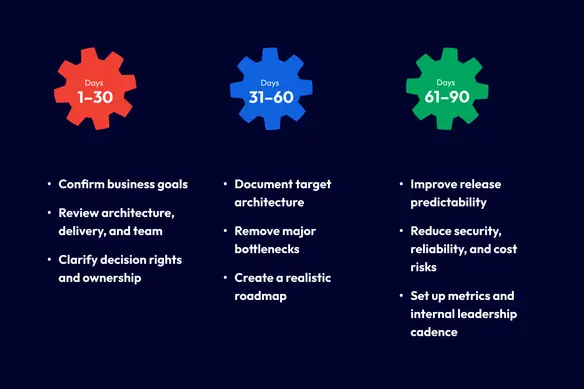
First 30 Days: Diagnose And Align
- Confirm business goals, constraints, and customer expectations
- Review architecture, delivery process, team structure, and risks
- Establish how decisions will be made, who owns what, and how progress will be communicated
Many playbooks recommend explicitly defining mandates and decision rights early, so everyone knows what the CTO can change and what “success” means.
Days 31 To 60: Choose And Commit
- Document target architecture and near term priorities
- Remove major bottlenecks (process, tooling, dependencies)
- Clarify the hiring plan, including roles needed now vs later
- Create a roadmap your team can actually ship against
Days 61 To 90: Execute And Stabilize
- Improve predictability, release confidence, and engineering hygiene
- Reduce risk areas, especially security, reliability, and cost drivers
- Set up metrics and a cadence for reviewing them
- Build internal leadership so the system holds when the fractional CTO is not in every meeting
This is also where teams decide whether to extend the fractional model, transition to a full-time CTO search, or keep the relationship available for strategic cycles.
How A Fractional CTO Works With Your Team
The best fractional CTOs do two things at once: they lead, and they transfer capability.
They Embed With Leadership
This keeps technology decisions connected to strategy, budget, and customer reality.
They Earn Trust With Engineers
Engineers trust leaders who can explain trade-offs clearly, make decisions, and protect focus. Strong communication is not a soft skill here; it is the job.
They Create Repeatable Systems
Instead of being a “single point of genius,” they build decision logs, roadmaps, standards, and routines that your team can own long term.
If your situation also includes a stretched team, staff augmentation can pair well with fractional leadership, as long as the leadership is clear first.
How SeeSaw Labs Delivers Fractional CTO Services
If you are exploring fractional leadership and want a clear example of what “good” looks like, SeeSaw Labs frames fractional CTO work as an embedded technical partnership that connects business goals and engineering execution.
What You Get With SeeSaw Labs
SeeSaw positions fractional CTO services as senior leadership without full-time overhead, with a focus on making smart platform choices, shipping faster, and scaling safely.
Key Focus Areas They Deliver
SeeSaw lists the core areas of fractional CTO delivery as:
- Technology roadmapping
- Architecture and platform selection
- Vendor and tooling evaluation
- Security and compliance readiness
- DevOps and cloud strategy
- Team design and hiring
- Delivery management
- Data and AI strategy
- Interim leadership and mentorship
How Engagement Is Structured
SeeSaw Labs outlines a 5D process that moves from discovery to a defined roadmap, then into delivery and optimization. This helps keep the engagement outcome-driven rather than open-ended.
If you want the full service details, including how they embed with teams and when to bring in fractional leadership, you can review SeeSaw Labs Fractional CTO Services.
How To Choose The Right Fractional CTO
A strong fractional CTO is not just a resume. Look for fit across four areas.
Clear, Business Grounded Communication
They should explain technical choices in a way non-technical stakeholders can act on.
Evidence Of Strategy And Execution
Many guides list strategy, architecture, and leadership, but the differentiator is whether they can turn direction into shipping outcomes.
Comfort With Ambiguity And Trade Offs
Early-stage and growth-stage companies rarely have perfect information. You want someone who can make sound decisions with imperfect inputs.
A Collaboration Style That Matches Your Team
Fractional does not mean distant. It should feel like a partnership with clear ownership boundaries and a consistent cadence.
If you want a broader view of external CTO models and when to use them, SeeSaw’s CTO Outsourcing guide is a useful companion read.
Common Misconceptions To Avoid
A Fractional CTO Is Just A Consultant
Some consultants advise, then leave. A fractional CTO is accountable for outcomes, and often helps lead execution through people and process.
A Fractional CTO Must Be Hands-On with Coding Daily
They can be technically deep, but their core value lies in decision-making and leadership. The CTO function connects technology with business direction.
Fractional Means Less Impact
The impact is often higher because time is spent on the highest leverage work, not every meeting by default.
FAQs
What Is A Fractional CTO In Simple Terms?
A fractional CTO is a part-time chief technology officer who provides executive-level technology leadership on a flexible schedule or contract basis.
How Many Hours A Week Does A Fractional CTO Work?
It varies. Some common arrangements are limited weekly hours or defined deliverables across a set engagement window. Many providers describe typical ranges like 10 to 25 hours per week, depending on the scope.
What Does A Fractional CTO Do First?
Usually, they assess the current state, align on business goals, clarify decision rights, then build a roadmap and execution plan that the team can follow.
Is A Fractional CTO Right For Startups?
Yes, especially when you need senior technical leadership to avoid costly missteps, but do not yet need a full-time executive.
What Is The Difference Between A Fractional CTO And An Interim CTO?
Fractional is typically an ongoing part-time leadership model. An interim is usually a temporary leadership bridge during transition or while hiring.
How Do I Know If I Need A CTO Or Just More Developers?
If the main problem is direction, prioritization, architecture choices, delivery predictability, or risk management, you need leadership. If direction is clear and delivery capacity is the only issue, you may need more engineering hands.
Conclusion
A fractional CTO can be the difference between moving fast with confidence and moving fast into technical debt you will spend the next year undoing. Done well, the model brings senior leadership, clearer decisions, and a delivery system your team can keep running.
If you are exploring this path, SeeSaw Labs’ Fractional CTO Services outlines how fractional leadership can support architecture, security, hiring, and delivery, without full-time overhead.
Key Takeaway
- A fractional CTO’s meaning is simple: flexible, executive-level technology leadership without a full-time commitment.
- Choose fractional when you need better decisions and leadership, choose interim for a transition gap, and choose outsourced models when you need external leadership support with a defined scope.
- The first 90 days should clarify the mandate, decision rights, roadmap, and measurable progress.
- The best engagements build systems your team can maintain, not on a single person.
- If delivery is slow, cloud costs are climbing, or compliance pressure is rising, it is often the right time to bring in fractional CTO leadership.