React Native vs Flutter vs Native for Healthcare Apps: What to Choose in 2026
SeeSaw Labs//11 Min Read
A practical comparison of React Native, Flutter, and native development for healthcare apps in 2026—covering performance, security, device access, team fit, and risk.
Introduction
You can build a healthcare app in almost any modern framework, but you cannot ship trust.
In 2026, patients expect fast, polished mobile experiences. Clinicians expect speed, reliability, and workflows that do not get in the way. Security teams expect proof, not promises. The framework you choose shapes all of that, especially once you add PHI, integrations, and real-world device constraints.
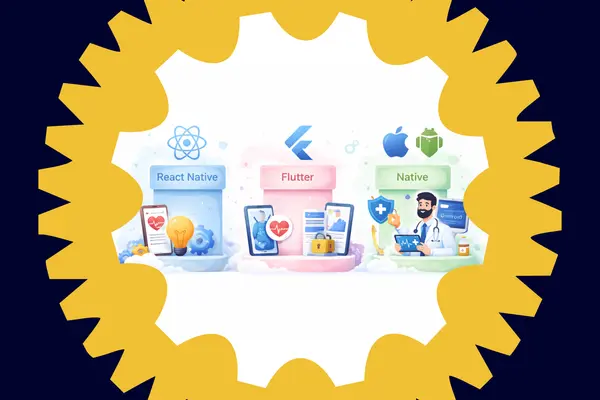
This guide breaks down React Native, Flutter, and native development for healthcare apps, offering a practical way to choose based on your product and risk profile.
What Changed In 2026 (And Why It Matters For Healthcare)
Two platform shifts are worth knowing before you pick a direction.
React Native’s New Architecture Is No Longer “Future Work”
React Native’s New Architecture is designed to improve core performance and enable higher-quality experiences, and it has been proven at scale in production apps.
Why it matters in healthcare:
- Complex screens (charts, dashboards, care plans) benefit from smoother rendering and scheduling.
- Apps that rely on native modules (camera scanning, biometrics, BLE devices) benefit from a cleaner, more modern native integration path.
Flutter’s Impeller Renderer Became The Default On More Devices
As of Flutter 3.27, Impeller is the default rendering engine for iOS and for Android API 29+.
Why it matters in healthcare:
- High-polish UI and consistent rendering across devices are common patient experience requirements.
- Flutter’s “it looks the same everywhere” approach can reduce UI drift across iOS and Android in regulated or highly reviewed flows.
These improvements do not automatically make one framework “the winner,” but they do set a new baseline for expectations in 2026.
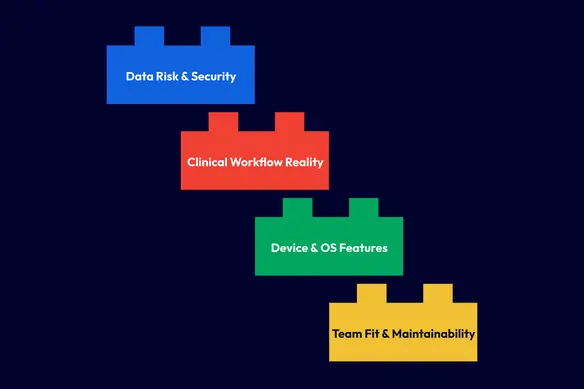
The Decision Criteria That Matter Most In Healthcare Apps
If your choice is driven only by development speed, you will feel it later in security reviews, integrations, and post-launch maintenance.
Use these criteria to guide the decision.
Data Risk And Security Expectations
If you handle ePHI in the US, HIPAA’s Security Rule establishes standards and safeguards to protect electronic protected health information.
Practical takeaway: compliance is not “React Native compliant” or “Flutter compliant.” Compliance is an outcome of your architecture, access controls, logging, encryption, policies, and risk management.
A strong baseline for security conversations is the OWASP MASVS, a widely used standard for mobile application security verification.
Clinical Workflow Reality
Clinician facing apps need:
- Fast navigation and minimal taps
- Offline tolerance in real environments
- Predictable background behavior for critical tasks
Patient apps need:
- Accessibility and clarity
- Trust building UI patterns
- Smooth onboarding and identity flows
Device Features And Ecosystem Fit
Healthcare apps often need:
- Biometric login
- Camera for document capture (insurance cards, IDs)
- Bluetooth device connectivity (RPM, wearables, peripherals)
- Deep linking and notifications for care reminders
- OS level health data integrations, like HealthKit on iOS or Health Connect on Android (when applicable)
Health data platforms also have privacy expectations and permission models you need to design around.
Team Fit And Long Term Maintainability
The best framework is the one your team can sustain:
- Hiring and onboarding
- Release cadence and upgrades
- Native expertise availability when edge cases hit
React Native For Healthcare Apps
React Native is often the fastest path to a solid cross-platform app when your team is already comfortable with JavaScript and TypeScript, and when you want a native look and feel on each platform.
Where React Native Tends To Shine
- Speed to market with a shared codebase and a familiar web style development workflow
- Strong ecosystem, especially if you already have React on the web
- Native look and platform conventions, which can matter for clinician adoption
- Improved performance potential with the New Architecture foundation
Watch Outs In Healthcare
- Native modules still matter: if you rely on device-specific behaviors, you will likely write or maintain some Swift and Kotlin code
- Dependency risk: healthcare teams often need longer support windows, so package maintenance and upgrade planning are important
- Security review readiness: You need a clear approach for secure storage, logging, and threat modeling, regardless of framework
Best Fit Use Cases
- Care coordination apps
- Patient portals with clear, standard UI patterns
- Internal dashboards and workflow apps
- Apps that share logic with a web product, especially when your team wants one product engineering rhythm
Flutter For Healthcare Apps
Flutter is a strong choice when you want a highly consistent, polished UI across iOS and Android, and when your product experience depends on custom design and animation quality.
Where Flutter Tends To Shine
- Pixel consistent UI across platforms
- Strong performance characteristics for UI heavy experiences, helped by its modern rendering approach and the move to Impeller defaults on many devices
- A cohesive widget system that can reduce UI fragmentation across iOS and Android
Watch Outs In Healthcare
- Team skill ramp: Dart is easy to learn, but your hiring pool may differ from JavaScript-heavy orgs
- Native bridges still exist: for medical devices, OS features, and edge cases, you may still build native integrations
- Device variability: always test on real device fleets, especially for older Android models and healthcare environments
Best Fit Use Cases
- Consumer patient apps where UI quality and brand consistency are central
- Wellness and engagement apps with a strong design layer
- Multi-platform experiences where you want consistent UI behavior across phones and tablets
Native iOS and Android for Healthcare Apps
Native development means Swift or Objective C for iOS and Kotlin or Java for Android, built separately. It is the highest control option, and the highest long-term investment.
Where Native Tends To Shine
- Maximum performance and platform control
- Fastest access to the newest OS features
- Complex background processing, lower-level Bluetooth integrations, and edge cases that cross platform layers sometimes struggle with
- The cleanest path when your product heavily relies on platform health ecosystems and their privacy models (HealthKit, Health Connect)
Watch Outs In Healthcare
- Two codebases can slow iteration, especially for early-stage products
- Feature parity drift between iOS and Android is real if you do not plan for it
- Cost is typically higher over time, unless the app’s complexity demands native anyway
Best Fit Use Cases
- Regulated or high-scrutiny apps where control and predictability matter most
- Apps with heavy device integration (advanced BLE workflows, specialized peripherals)
- Imaging and high-performance visualization scenarios
- Products with deep OS specific experiences that are hard to replicate cross platform
Quick Comparison Table
| What You Care About | React Native | Flutter | Native |
|---|---|---|---|
| Time To Market. | Fast | Fast | Slower |
| UI Consistency Across iOS and Android | Medium | High | Medium |
| ”Feels Native” By Default | High | Medium | Highest |
| Access To New OS Features | Medium | Medium | High |
| Medical Device And BLE Complexity | Medium | Medium | High |
| Hiring Fit For Web Or JS Teams | High | Medium | Low |
| Long-Term Control And Predictability | Medium | Medium | High |
Recommendations By App Type
Telehealth And Messaging
Often best with React Native or Flutter, unless you have extremely advanced real-time requirements. The bigger success factor is reliability, testing on real devices, and secure backend integration.
Patient Engagement And Wellness
Flutter is often a strong fit when UI polish and consistent cross-platform experience are the priority, especially in marketing-led products.
Care Coordination And Clinical Workflow Apps
React Native or native tends to work well here, because teams frequently need platform conventions, fast iteration, and reliable integrations.
Remote Patient Monitoring With Devices
If you are connecting to medical peripherals, native becomes more attractive. React Native and Flutter can still work, but plan for native module work, device certification testing, and deeper QA.
Apps That Integrate With HealthKit Or Health Connect
Any approach can work, but your success depends on implementing privacy-first permission flows and designing around platform rules and user disclosures.
How To De Risk Your Choice (Security, Compliance, Testing)
Treat Compliance As A Build System, Not A Checkbox
HIPAA Security Rule expectations include administrative, physical, and technical safeguards, and most teams also need a documented risk analysis approach.
Even if your app is not strictly within HIPAA’s scope, your buyers may still expect similar safeguards.
Use A Clear Mobile Security Baseline
OWASP MASVS gives you a practical checklist for mobile security controls and testing coverage.
This is useful in vendor reviews, penetration testing prep, and internal security signoff.
Build A Proof Of Risk Early
Before full build, validate the hardest parts:
- Authentication and role access
- Secure data storage model
- The top 1 to 2 integrations
- The most complex device feature (camera, BLE, background tasks)
If interoperability is part of your scope, SeeSaw Labs has a helpful guide on healthcare product design and standards thinking that can ground early decisions.
How SeeSaw Labs Helps Teams Choose And Build
SeeSaw Labs builds mobile apps for iOS and Android, including React Native and Flutter, and focuses on performance and security as core delivery expectations.
A good framework choice is rarely about preference. It is about aligning your goals, constraints, and risk profile, then shipping in a way that holds up under security review and real user pressure.
If you are in the early stages, this guide on launching healthcare products can help you think through MVP scope and expectations.
And if you are trying to avoid common early pitfalls.
FAQs
Is React Native Or Flutter Better For HIPAA Compliance?
Neither framework is “HIPAA compliant” by itself. HIPAA alignment depends on how you handle ePHI, your security controls, logging, access management, vendor agreements, and ongoing risk analysis.
Which Has Better Performance In 2026, React Native Or Flutter?
Both can deliver excellent performance. In 2026, React Native’s New Architecture improves the foundation for high-quality experiences, and Flutter’s Impeller default renderer on many devices supports smooth rendering.
When Should I Choose Native For A Healthcare App?
Choose native when you need maximum control over device features, advanced background behavior, complex Bluetooth workflows, or extremely performance-sensitive screens.
Can Flutter Or React Native Access HealthKit And Health Connect?
Yes, typically through platform plugins or custom native modules, but you must design permission and privacy experiences around platform rules and disclosures.
What Should I Prioritize If My App Targets Clinicians?
Prioritize workflow speed, reliability, offline tolerance, predictable navigation, and error handling. Clinician adoption drops quickly when apps feel slow or interruptive.
How do I Pick If I need iOS and Android Fast, But Also Need Devices Later?
A common pattern is to start cross-platform for the MVP while designing the architecture and native module strategy, so you can add deeper native components as the product proves its value.
Conclusion
In 2026, the choice between React Native vs Flutter vs native is less about hype and more about your healthcare reality: PHI risk, device needs, workflow complexity, and the team that will maintain the product for years.
If you want a second opinion on the best path for your use case, SeeSaw Labs’ mobile team builds across React Native, Flutter, and native, and can help you choose based on goals, budget, and timeline.
Key Takeaway
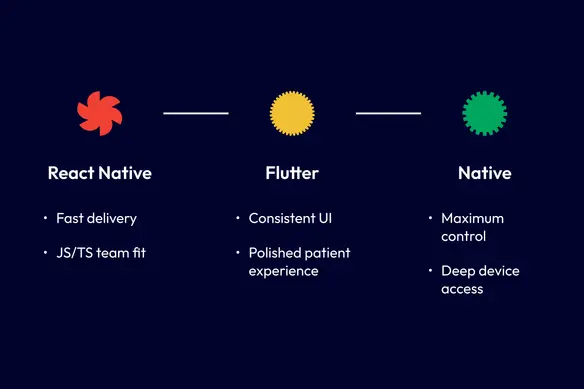
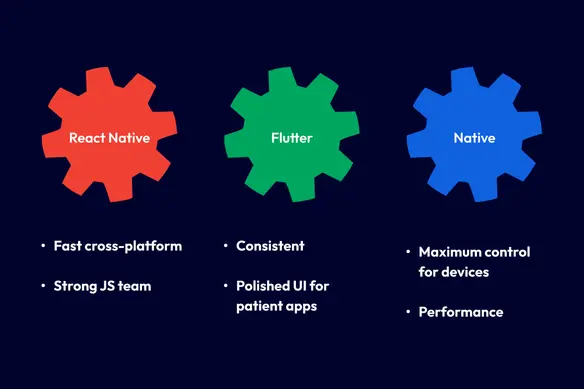
- Choose React Native when you want fast cross-platform delivery, a native feel, and your team is strong in JavaScript and React.
- Choose Flutter when UI consistency and a polished patient experience are top priorities, and you want a single design system across platforms.
- Choose native when device integration, performance control, and OS specific capabilities are central to the product.
- For healthcare, security, and compliance are outcomes of your system design and processes, not the framework name.
- Reduce risk early by prototyping the hardest integrations and adopting a clear mobile security baseline before scaling.